Wednesday, November 30, 2011


Tuesday, November 22, 2011
Cape Town
I can describe Cape Town in two words: Los Angeles.
The beach, the mountains, the coast, the smell, the sun, the fauna: palm trees, jacarandas, agapanthus, bougainvillaeas, all reminded me of LA.
Also the urban sprawl, the traffic, the shopping malls, and the crushing poverty confined to a few small areas.
Of course, Los Angeles doesn't get gale force winds, or have one of the highest murder rates in the world. But then again, Los Angeles doesn't rank on the Mercer list of 'most livable cities in the world.' (Cape Town is 86.)
Which, I guess, is kind of the point: Cape Town is a study in contrasts. But I wasn't there to judge its economy, its social equality, or its political leadership. I was just there on holiday, and it was spectacular.
First, I need to dispel two myths: 1) Cape Town is not at Cape Point, and Cape Point is not the southernmost point of Africa. And 2) Water does not drain counter-clockwise south of the equator.
Table Mountain looms over the Cape; on the north side is the sea, with a tiny sliver of apartments in between. (I thought the sea was south until I saw the sun setting in the east.) South of Cape Town is the Cape peninsula -- which on a map resembles Baja California. All along are dotted small beaches, each with their own characteristics: Some are protected from the wind; some are sandy, others rocky; some are cold water (from the Atlantic current) while others have warm water (from the Indian ocean). The warm water beaches have sharks, with several attacks each year.
On the other side of the mountain, Cape Town sprawls out over 948 sq mi (about half the size of Los Angeles), with a population of 3.5 million. A few "shanty towns" speak to the poverty of the area--large areas of corrugated metal huts, connected to the electric grid. It is also where most of the crime is; the tourist areas are fairly safe.
The top of the mountain (reached by cable car) offers spectacular views of the ocean and the city. I'm sorry I didn't get to see the sunset from the mountain, but the fickle weather turned, clouds formed and poured into the gorges like waterfalls, the wind started to blow, and I got down as quickly as I could. The wind howled all through the night, but the next morning was clear and calm again.
Along "false bay" is Boulders beach, notable for a flock of African penguins (formerly known as "jackass" penguins because of their mating call). However, November is moulting season, and since they aren't waterproof, they stay out of the water. (Which means they don't eat, which means they mostly just sit around for three weeks doing nothing.) I got quite a few photos of them doing nothing. I also got some photos of a right whale doing nothing, while her calf swam around the bay.
It was hard to remember it was November, because it was spring in the southern hemisphere. The jacaranda (with their purple leaves) were in full show, the star jasmine perfumed the air, and the proteas (South Africa's national flower) were blooming on the hills. Days were long, with sunset occurring around 8pm. The weather varied incredibility, with highs in the low 60s some days, and high 80s the others. It was, in short, spectacular.
There was much I didn't do. I didn't visit Kirstenbosch, Groot Constantia, Franschhoek, or Robben Island. I didn't go to any game reserves. I didn't go sailing, parasailing, or shark diving. I didn't visit the aquarium, or see Cape Point. I did eat my way through Cape Town, enjoying bilkes, rusks, cappuccino muffins, and milktarts. I went to a wine farm and sampled six bottles, and even bought a Riesling. Friday night I went to an Orthodox synagogue, and Saturday I went to an optometrist and bought new glasses. (Not related.)
As I told everyone I met: This was my first visit to South Africa, but definitely not my last. It was as beautiful as I expected it to be, and the people were equally lovely. It is not a paradise, and it still has a long way to go in terms of social equality, which is being hindered by massive political corruption. I don't know that I'd want to live there, but I understand why people love it.
[Photos to follow soon.]
The beach, the mountains, the coast, the smell, the sun, the fauna: palm trees, jacarandas, agapanthus, bougainvillaeas, all reminded me of LA.
Also the urban sprawl, the traffic, the shopping malls, and the crushing poverty confined to a few small areas.
Of course, Los Angeles doesn't get gale force winds, or have one of the highest murder rates in the world. But then again, Los Angeles doesn't rank on the Mercer list of 'most livable cities in the world.' (Cape Town is 86.)
Which, I guess, is kind of the point: Cape Town is a study in contrasts. But I wasn't there to judge its economy, its social equality, or its political leadership. I was just there on holiday, and it was spectacular.
First, I need to dispel two myths: 1) Cape Town is not at Cape Point, and Cape Point is not the southernmost point of Africa. And 2) Water does not drain counter-clockwise south of the equator.
Table Mountain looms over the Cape; on the north side is the sea, with a tiny sliver of apartments in between. (I thought the sea was south until I saw the sun setting in the east.) South of Cape Town is the Cape peninsula -- which on a map resembles Baja California. All along are dotted small beaches, each with their own characteristics: Some are protected from the wind; some are sandy, others rocky; some are cold water (from the Atlantic current) while others have warm water (from the Indian ocean). The warm water beaches have sharks, with several attacks each year.
On the other side of the mountain, Cape Town sprawls out over 948 sq mi (about half the size of Los Angeles), with a population of 3.5 million. A few "shanty towns" speak to the poverty of the area--large areas of corrugated metal huts, connected to the electric grid. It is also where most of the crime is; the tourist areas are fairly safe.
The top of the mountain (reached by cable car) offers spectacular views of the ocean and the city. I'm sorry I didn't get to see the sunset from the mountain, but the fickle weather turned, clouds formed and poured into the gorges like waterfalls, the wind started to blow, and I got down as quickly as I could. The wind howled all through the night, but the next morning was clear and calm again.
Along "false bay" is Boulders beach, notable for a flock of African penguins (formerly known as "jackass" penguins because of their mating call). However, November is moulting season, and since they aren't waterproof, they stay out of the water. (Which means they don't eat, which means they mostly just sit around for three weeks doing nothing.) I got quite a few photos of them doing nothing. I also got some photos of a right whale doing nothing, while her calf swam around the bay.
It was hard to remember it was November, because it was spring in the southern hemisphere. The jacaranda (with their purple leaves) were in full show, the star jasmine perfumed the air, and the proteas (South Africa's national flower) were blooming on the hills. Days were long, with sunset occurring around 8pm. The weather varied incredibility, with highs in the low 60s some days, and high 80s the others. It was, in short, spectacular.

There was much I didn't do. I didn't visit Kirstenbosch, Groot Constantia, Franschhoek, or Robben Island. I didn't go to any game reserves. I didn't go sailing, parasailing, or shark diving. I didn't visit the aquarium, or see Cape Point. I did eat my way through Cape Town, enjoying bilkes, rusks, cappuccino muffins, and milktarts. I went to a wine farm and sampled six bottles, and even bought a Riesling. Friday night I went to an Orthodox synagogue, and Saturday I went to an optometrist and bought new glasses. (Not related.)
As I told everyone I met: This was my first visit to South Africa, but definitely not my last. It was as beautiful as I expected it to be, and the people were equally lovely. It is not a paradise, and it still has a long way to go in terms of social equality, which is being hindered by massive political corruption. I don't know that I'd want to live there, but I understand why people love it.
[Photos to follow soon.]
Thursday, November 10, 2011
Where have I been?
That's a very good question. I'm not sure I have a good answer. It *feels* like I've been really busy, though.
Over the past six weeks, I've had some friends move from Los Angeles to London, although it took me three weeks to actually meet up with them. I attended High Holy Days at my new synagogue. I spent a week in Wolverhampton at a training course -- the class was interesting, but Wolverhampton wasn't. I had tea at Cliveden House, gone to a couple of plays, a couple of movies. I didn't do anything for Halloween. I think I went to the gym once.
Tomorrow I'm flying to South Africa for 10 days, which is cool -- seriously, it's about 21C (70F), much lower than the November average of 25C (77F), but still warmer than England! When I get back, I have to go back to Wolverhampton for another week of training -- this time I'm driving, partly so I'm not stuck at the hotel every evening, but mostly because the plane from South Africa lands at 6:30am, and training starts at 9am the same day! In December I'm hoping to go back to the States to see my family, and may be attending Limmud, a week-long Jewish educational conference that sounds very interesting. (However, I'm not likely to get time off from work to do both.)
At the end of December, two more friends are moving from New York to London, although they have a new baby so I'm not sure how much I'll get to see of them. And then it's New Years and I have absolutely no plans after that. :-)
Over the past six weeks, I've had some friends move from Los Angeles to London, although it took me three weeks to actually meet up with them. I attended High Holy Days at my new synagogue. I spent a week in Wolverhampton at a training course -- the class was interesting, but Wolverhampton wasn't. I had tea at Cliveden House, gone to a couple of plays, a couple of movies. I didn't do anything for Halloween. I think I went to the gym once.
Tomorrow I'm flying to South Africa for 10 days, which is cool -- seriously, it's about 21C (70F), much lower than the November average of 25C (77F), but still warmer than England! When I get back, I have to go back to Wolverhampton for another week of training -- this time I'm driving, partly so I'm not stuck at the hotel every evening, but mostly because the plane from South Africa lands at 6:30am, and training starts at 9am the same day! In December I'm hoping to go back to the States to see my family, and may be attending Limmud, a week-long Jewish educational conference that sounds very interesting. (However, I'm not likely to get time off from work to do both.)
At the end of December, two more friends are moving from New York to London, although they have a new baby so I'm not sure how much I'll get to see of them. And then it's New Years and I have absolutely no plans after that. :-)
Friday, November 4, 2011
Eurozone crisis
This is a brilliant chart, highlighting the Eurozone crisis:
http://www.bbc.co.uk/news/business-13366011
If you think of GDP as your salary, and the annual deficit as the amount you borrow each year to make ends meet, you can see that most countries have been living beyond their means for many years, with only Finland actively saving money. (Ireland was saving, but the 'celtic tiger' collapsed so spectacularly, they are now running a 30% deficit, which is unheard of in a first world country.)
When California faced its budget crisis in 2008, it was forced to increase taxes and curb its spending in order to bring its budget under control. Imagine the alternative -- that California had simply continued borrowing money (and lying to the Federal government about how much it was borrowing) in order to pay its bills. Eventually it would have gotten to the point where it couldn't borrow any more, which meant it couldn't pay back what it owed, and would have defaulted on its loans.
Of course, governments do that all the time, but then they "devalue" the currency, in effect saying that it's worth less, and therefore they don't have to pay as much back. California can't do that because it doesn't control the dollar, and the Federal Government wouldn't devalue the dollar just because of California, so what would eventually happen is the Federal Government would have to step in and pay off California's debt.
That's exactly the same situation the Eurozone finds itself in with Greece, except with two key differences:.
1. Unlike the US -- where the Federal government has control and oversight of the 50 States -- the Euro is simply an agreement between member countries, with each country promising to behave responsibly. Greece actually lied about its financial condition for many years prior to the crisis.
2. When California tried to control spending, people were unhappy. When Greece tried to do the same, the people rioted!
The EU have already given Greece 220 billion euros (US $300 billion) and this week they rokered a deal to forgive Greece half of its debts, all in exchange for the promise that Greece would curb its spending...and the Greek prime minister thumbed his nose at it! Today, three years after this all came to light, Greece is still running an annual deficit, borrowing more than it can possibly pay back.
But the bigger problem is that, as the chart shows, it is clearly not limited to Portugal, Ireland, Greece, and Spain (the so-called "PIGS" countries). In terms of GDP, the UK is running an annual deficit equal to Greece, and worse than Spain! Germany and France, who are having to bail out the other countries, are already running their own deficit. (France is at 7%, and Germany at 3.3%)
And while the US has recovered somewhat from George W's final farewell -- taking the US from a balanced budget to a 10% annual deficit in just 8 short years (and implementing tax cuts at the same time!) -- it is not much better.
The only bright spot appears to be Estonia, which has achieved a balanced budget during the economic recession! Why isn't anyone getting financial advice from them?
http://www.bbc.co.uk/news/business-13366011
If you think of GDP as your salary, and the annual deficit as the amount you borrow each year to make ends meet, you can see that most countries have been living beyond their means for many years, with only Finland actively saving money. (Ireland was saving, but the 'celtic tiger' collapsed so spectacularly, they are now running a 30% deficit, which is unheard of in a first world country.)
When California faced its budget crisis in 2008, it was forced to increase taxes and curb its spending in order to bring its budget under control. Imagine the alternative -- that California had simply continued borrowing money (and lying to the Federal government about how much it was borrowing) in order to pay its bills. Eventually it would have gotten to the point where it couldn't borrow any more, which meant it couldn't pay back what it owed, and would have defaulted on its loans.
Of course, governments do that all the time, but then they "devalue" the currency, in effect saying that it's worth less, and therefore they don't have to pay as much back. California can't do that because it doesn't control the dollar, and the Federal Government wouldn't devalue the dollar just because of California, so what would eventually happen is the Federal Government would have to step in and pay off California's debt.
That's exactly the same situation the Eurozone finds itself in with Greece, except with two key differences:.
1. Unlike the US -- where the Federal government has control and oversight of the 50 States -- the Euro is simply an agreement between member countries, with each country promising to behave responsibly. Greece actually lied about its financial condition for many years prior to the crisis.
2. When California tried to control spending, people were unhappy. When Greece tried to do the same, the people rioted!
The EU have already given Greece 220 billion euros (US $300 billion) and this week they rokered a deal to forgive Greece half of its debts, all in exchange for the promise that Greece would curb its spending...and the Greek prime minister thumbed his nose at it! Today, three years after this all came to light, Greece is still running an annual deficit, borrowing more than it can possibly pay back.
But the bigger problem is that, as the chart shows, it is clearly not limited to Portugal, Ireland, Greece, and Spain (the so-called "PIGS" countries). In terms of GDP, the UK is running an annual deficit equal to Greece, and worse than Spain! Germany and France, who are having to bail out the other countries, are already running their own deficit. (France is at 7%, and Germany at 3.3%)
And while the US has recovered somewhat from George W's final farewell -- taking the US from a balanced budget to a 10% annual deficit in just 8 short years (and implementing tax cuts at the same time!) -- it is not much better.
The only bright spot appears to be Estonia, which has achieved a balanced budget during the economic recession! Why isn't anyone getting financial advice from them?
Tuesday, October 11, 2011
Marking time
Calculating when Jewish holidays occur is now pretty easy, but it didn't used to be that way. Since the months started on the new moon, and the holidays started at sunset in Jerusalem, messengers were dispatched to let other communities know when the festivals should be celebrated. When the second temple was destroyed by the Romans, there were no more messengers, so many communities (the diaspora) started celebrating festivals over two days, just to be sure. (Even today, they celebrate on two days out of tradition.)
And although a day seems like a simple thing to keep track of, it isn't. That's because the time it takes for the earth to rotate (one day) has nothing to do with the time it takes for the moon to revolve around the earth (one month) which has nothing to do with the time it takes for the earth to revolve around the sun (one year). So a lunar month lasts 27 days and 8 hours; a lunar year is 354 days 9 hours; a solar year is either 365.24219 days (tropical) or 365.2564 days (sidereal). Not to mention the moon is moving away at 4 inches per year, slowing its rotation, and the length of days may be affected by global warming as higher seas create a greater drag on the earth's rotation!
More trivia: The moon revolves at the same rate it rotates around Earth (that is, every 27 days and 8 hours) which is why the same face is always pointing towards Earth, and we didn't see the far side until 1959!
The ancient Sumerians had a pretty sophisticated "lunisolar" calendar -- 12 months, each starting with the sighting of a new moon, and an extra month was added periodically to keep the months in the same seasons. (The Sumerians also gave us 60 minutes -- they liked 60 because it can be easily factored by 2, 3, 4, 5, 6, and 10.) The Jews used the Sumer calendar (with some variations) while Europe adopted the Roman "Julian" calendar, which made the months slightly longer but got rid of the "leap month." The Muslims, by contrast, adopted a strict lunar calendar, so a Muslim year is 354 days, and the months change seasons, because they lose abut 12 days every year -- so in 10 years a holiday that was in December will now be in October! (According to the European calendar, anyway).
Incidentally, it was the Egyptians who subdivided daytime and nighttime into twelve hours each, but the length of the hour depended on the season. The Greeks--who also liked the number 60 but wanted a stable measurement of time--defined the hour as 1/24th of a day, a "minute" (as in "diminutive") as 1/60th of an hour, a "second" as 1/60 of a minute, a "third" as 1/60 of a second, a "fourth" as 1/60 of a third, and so on. Of course, we no longer use "thirds" and "fourths" but "seconds" stuck.
More trivia: "Idus" is latin for "half division" and referred to the half moon (what we would call the full moon). Since months started on the new moon, the "idus" was generally on the 13th of the month; however, when Julius Ceasar changed the months so they no longer followed the lunar cycle, "ides" was no longer relevant. However, the term was still in use when Julius was assassinated on the 15th of March -- now known as the "Ides of March."
Of course, the Julian system wasn't perfect -- the years were fixed at 365.25 days, but the solar year is about 11 minutes shorter. That means it gained one day every 131 years -- not bad, but the calendar was in use for over 2000 years! In addition, early timekeepers got confused and started adding leap days every 3 years -- as a result, when Augustus took over in 4CE, he had to drop 3 days from the calendar to fix it. In addition, there was no fixed point for starting the calendar, and so it was generally based on the rule of the regnant (i.e. 1 Julius, or 1 August).
More trivia: It is an urban myth that February used to have 29 days, and Augustus decided to move one day to August so it had the same number of days as Julius (July). You probably didn't even know that rumor, but now you know it isn't true.
The idea of Anno Domini was set out in the 6th century and adopted sporadically, but it wasn't until the 16th century that the Gregorian calendar replaced the Julian calendar, and even that wasn't adopted universally until the 1920s. (Seriously!) Of course, since Anno Domini translates as "The Year of our Lord" and refers to Jesus Christ, the Jews adapted it politically but not religiously. (And even politically, the term "common era" is used.) As countries adopted the Gregorian calendar, they had to skip ten days to move the spring equinox back to March 21.
Had any of these civilizations been particularly clever, they would have jettisoned the entire lunar calendar, because the moon isn't relevant to the seasons, it's just a pretty bauble in the night. Then they could have come up with a meaningful division of years that didn't involve the pattern "31,28,31,30,31,30,31,31,30,31,30,31". The Vikings actually tried this, but they may have oversimplified it a bit: They divided the year into two seasons, summer and winter, from April to October and October to April. They then divided each season into weeks, and got rid of the months. Apparently this worked quite well for them, as they didn't adopt the Gregorian calendar until the 1800s, some 200 years after it had been introduced.
More trivia: In the Sumerian calendar, there were no weeks; just days. The Jews defined the seven day week based on Genesis (God created the world in 6 days and rested on the 7th). Why seven days? Who knows. Maybe it was because of the four phases of the moon (28 day lunar cycle / 4 phases = 7 days.) Maybe it just seemed like a good idea to rest every seven days. The Romans started with an 8-day week but later adopted the Jewish 7-day week. The Chinese and Egyptians had a 10-day week, and the Celts (in Britain) had an 8-day/9-night week, which was closer to the 27.3 day lunar cycle, but must have been very confusing.
And last bit of trivia--actually, it's more of a rant: As the moon rotates every 27.9 days, and revolves around the sun every 365 days (same as earth), there are actually only 13 days a year on the moon! If an earth sunset lasts 2-3 minutes (depending on season and latitude), then the equivalent lunar sunset would last 84 minutes! In fact, you'd only have to travel 10 mph to stay ahead of the terminator line! So why is it that every science fiction film shows the lunar sunset overtaking the hapless astronauts in a matter of minutes?
And although a day seems like a simple thing to keep track of, it isn't. That's because the time it takes for the earth to rotate (one day) has nothing to do with the time it takes for the moon to revolve around the earth (one month) which has nothing to do with the time it takes for the earth to revolve around the sun (one year). So a lunar month lasts 27 days and 8 hours; a lunar year is 354 days 9 hours; a solar year is either 365.24219 days (tropical) or 365.2564 days (sidereal). Not to mention the moon is moving away at 4 inches per year, slowing its rotation, and the length of days may be affected by global warming as higher seas create a greater drag on the earth's rotation!
More trivia: The moon revolves at the same rate it rotates around Earth (that is, every 27 days and 8 hours) which is why the same face is always pointing towards Earth, and we didn't see the far side until 1959!
The ancient Sumerians had a pretty sophisticated "lunisolar" calendar -- 12 months, each starting with the sighting of a new moon, and an extra month was added periodically to keep the months in the same seasons. (The Sumerians also gave us 60 minutes -- they liked 60 because it can be easily factored by 2, 3, 4, 5, 6, and 10.) The Jews used the Sumer calendar (with some variations) while Europe adopted the Roman "Julian" calendar, which made the months slightly longer but got rid of the "leap month." The Muslims, by contrast, adopted a strict lunar calendar, so a Muslim year is 354 days, and the months change seasons, because they lose abut 12 days every year -- so in 10 years a holiday that was in December will now be in October! (According to the European calendar, anyway).
Incidentally, it was the Egyptians who subdivided daytime and nighttime into twelve hours each, but the length of the hour depended on the season. The Greeks--who also liked the number 60 but wanted a stable measurement of time--defined the hour as 1/24th of a day, a "minute" (as in "diminutive") as 1/60th of an hour, a "second" as 1/60 of a minute, a "third" as 1/60 of a second, a "fourth" as 1/60 of a third, and so on. Of course, we no longer use "thirds" and "fourths" but "seconds" stuck.
More trivia: "Idus" is latin for "half division" and referred to the half moon (what we would call the full moon). Since months started on the new moon, the "idus" was generally on the 13th of the month; however, when Julius Ceasar changed the months so they no longer followed the lunar cycle, "ides" was no longer relevant. However, the term was still in use when Julius was assassinated on the 15th of March -- now known as the "Ides of March."
Of course, the Julian system wasn't perfect -- the years were fixed at 365.25 days, but the solar year is about 11 minutes shorter. That means it gained one day every 131 years -- not bad, but the calendar was in use for over 2000 years! In addition, early timekeepers got confused and started adding leap days every 3 years -- as a result, when Augustus took over in 4CE, he had to drop 3 days from the calendar to fix it. In addition, there was no fixed point for starting the calendar, and so it was generally based on the rule of the regnant (i.e. 1 Julius, or 1 August).
More trivia: It is an urban myth that February used to have 29 days, and Augustus decided to move one day to August so it had the same number of days as Julius (July). You probably didn't even know that rumor, but now you know it isn't true.
The idea of Anno Domini was set out in the 6th century and adopted sporadically, but it wasn't until the 16th century that the Gregorian calendar replaced the Julian calendar, and even that wasn't adopted universally until the 1920s. (Seriously!) Of course, since Anno Domini translates as "The Year of our Lord" and refers to Jesus Christ, the Jews adapted it politically but not religiously. (And even politically, the term "common era" is used.) As countries adopted the Gregorian calendar, they had to skip ten days to move the spring equinox back to March 21.
Had any of these civilizations been particularly clever, they would have jettisoned the entire lunar calendar, because the moon isn't relevant to the seasons, it's just a pretty bauble in the night. Then they could have come up with a meaningful division of years that didn't involve the pattern "31,28,31,30,31,30,31,31,30,31,30,31". The Vikings actually tried this, but they may have oversimplified it a bit: They divided the year into two seasons, summer and winter, from April to October and October to April. They then divided each season into weeks, and got rid of the months. Apparently this worked quite well for them, as they didn't adopt the Gregorian calendar until the 1800s, some 200 years after it had been introduced.
More trivia: In the Sumerian calendar, there were no weeks; just days. The Jews defined the seven day week based on Genesis (God created the world in 6 days and rested on the 7th). Why seven days? Who knows. Maybe it was because of the four phases of the moon (28 day lunar cycle / 4 phases = 7 days.) Maybe it just seemed like a good idea to rest every seven days. The Romans started with an 8-day week but later adopted the Jewish 7-day week. The Chinese and Egyptians had a 10-day week, and the Celts (in Britain) had an 8-day/9-night week, which was closer to the 27.3 day lunar cycle, but must have been very confusing.
And last bit of trivia--actually, it's more of a rant: As the moon rotates every 27.9 days, and revolves around the sun every 365 days (same as earth), there are actually only 13 days a year on the moon! If an earth sunset lasts 2-3 minutes (depending on season and latitude), then the equivalent lunar sunset would last 84 minutes! In fact, you'd only have to travel 10 mph to stay ahead of the terminator line! So why is it that every science fiction film shows the lunar sunset overtaking the hapless astronauts in a matter of minutes?
Saturday, October 8, 2011
What Jews believe
Jews believe that God created the world on Rosh Hashana (literally 'head of the year') 5,772 years ago, and that on Rosh Hashana God reviews your life for the past year and pencils you in the book of life, giving you ten days to repent, give to charity, and otherwise convince God that you are worthy before he seals the book on Yom Kippur (literally, 'day of atonement'). On Yom Kippur, Jews fast for 25 hours, from sunset to sunset (plus a little extra just in case), and spend most of that time in church, praying. Jews are not allowed to eat, drink, work, wash, have sex, smoke, or wear leather shoes.
The Bible said: "On the first day of the seventh month you are to have a day of sabbath rest, a sacred assembly commemorated with trumpet blasts. Do no regular work, but present a food offering to the LORD.... The tenth day of this seventh month is the Day of Atonement. Hold a sacred assembly and deny yourselves, and present a food offering to the LORD." (Leviticus 23)
So, how did we get from two days of rest to 10 days of atonement? That's the beauty of religion.
First, how did the "first day of the seventh month" get to be the "head of the year"? Well, in Judaism, there are four new years -- one for kings, one for animals, one for vegetables, and one for trees. Not suprisingingly, the new year for animals is in the spring, vegetables in the summer, and trees in the autumn. The one for kings is actually the first day of the first month of the Jewish calendar, but somehow the vegetable new year became the day they changed the year. It would be like us celebrating New Year's day on April 1 -- how crazy would that be?
Oh wait, that's exactly what we did until 1582, when the calendar was changed and the new year was moved to January 1. Never mind.
Second, how was it decided that world was created on Rosh Hashanah? Well, if you actually believe our planet is less than 6,000 years old, you have other issues, so I'm going to skip this one.
Third, when did Rosh Hashanah and Yom Kippur become linked? Leviticus didn't say anything about "high holydays" or "days of awe." It didn't say anything about a book of life, or about giving to charity, or apologising to people you've wronged -- it just said on Rosh Hashana you should blow a horn, and on Yom Kippur you should deny yourself and atone. Leviticus doesn't link these two holidays; in fact, they are part of a list of six holidays, one of which comes five days after Yom Kippur, but it's not linked at all! Somehow, these ten days not only became linked, but somehow became the most important in the Jewish calendar. There's no rhyme or reason.
Fourth, how does "deny yourself" become translated as "don't eat, drink, work, wash, have sex, smoke, or wear leather shoes"? Not eating or drinking are self-evident. Not having sex makes sense, but the real reason is that elsewhere in the Bible it says coming in contact with semen makes you ritually unclean. (In fact, I was told that before the destruction of the Temple, the High Priest was kept awake the night before Yom Kippur lest he have a wet dream, and thus be unable to perform his duties the next day.)
But really, wear leather shoes? The best explanation I've heard is that back then the only types of shoes were leather, and so going without them (i.e. barefoot) was a hardship. However, to get around this proscription today, people wear trainers, which are even more comfortable! Go figure.
And smoking wasn't prohibited because it was a pleasure you should deny yourself, but because the cigarette butt has to pass your lips, so it's almost like eating. You know I'm not making this stuff up.
And finally, the rules around working are absolutely hilarious. Keep in mind, we're talking 2,500+ years ago in an agrarian society; there were no weekends or holidays for the workers. The Jewish calendar was a revelation! And you'd think common sense would dictate that "do no regular work" would mean just that -- no work in your regular occupation. However, the Rabbis couldn't content themselves with something so simple, so they defined 39 prohibited activities:
Today, observant Jews won't drive on Saturday (or any holiday) because the petrol engine is "kindling a fire." (And they won't drive an electric vehicle because creating a spark is also considered kinding a fire.) They also won't flip a switch for the same reason -- so if a light is on, it stays on the entire time.
Finally, what happened to the food offerings to the LORD? Well, the LORD only presided in the Temple, which the Romans destroyed in 70 CE. No Temple, no LORD, no food offerings. More for us.
OK, so that's what the Jews believe. What *I* believe is that the link between fasting and spirituality (or maybe just hallucinating) is well established, and denying yourself one day of the year -- to really make you appreciate your place in the world -- is a wonderful tradition. I believe that coming to synagogue to pray for forgiveness *as a community* (not an individual) also reinforces your place in that community, and reminds you that you are your brother's keeper. I believe that giving you ten days to "make good" really forces you to consider the past year; it's not going to church on Easter and getting it over with. I believe that breaking the fast with friends and family, all of whom have been denying themselves as well, is what really makes it holy.
So tomorrow I will be hungry, tired, and sitting in a gym all day. (Most Jews only attend synagogue on these two days of the year, so they have to be moved to a larger venue. Last year it was under a tent; this year it is in a gym.) I will be practicing my Hebrew and haltingly singing the few songs I know. I will be alone amongst about 500 people, with no friends or family, but I will feel a certain kinship with every one of them, because they are there for the same reasons I am. Not because they believe God commanded them to, or because they are worried about being written in the book of life, and certainly not because they enjoy being hungry and hanging out with people who haven't bathed, but because they instinctively feel the need to come together, to reflect and consider, to deny themselves for one day, and to do so as a community.
My community.
The Bible said: "On the first day of the seventh month you are to have a day of sabbath rest, a sacred assembly commemorated with trumpet blasts. Do no regular work, but present a food offering to the LORD.... The tenth day of this seventh month is the Day of Atonement. Hold a sacred assembly and deny yourselves, and present a food offering to the LORD." (Leviticus 23)
So, how did we get from two days of rest to 10 days of atonement? That's the beauty of religion.
First, how did the "first day of the seventh month" get to be the "head of the year"? Well, in Judaism, there are four new years -- one for kings, one for animals, one for vegetables, and one for trees. Not suprisingingly, the new year for animals is in the spring, vegetables in the summer, and trees in the autumn. The one for kings is actually the first day of the first month of the Jewish calendar, but somehow the vegetable new year became the day they changed the year. It would be like us celebrating New Year's day on April 1 -- how crazy would that be?
Oh wait, that's exactly what we did until 1582, when the calendar was changed and the new year was moved to January 1. Never mind.
Second, how was it decided that world was created on Rosh Hashanah? Well, if you actually believe our planet is less than 6,000 years old, you have other issues, so I'm going to skip this one.
Third, when did Rosh Hashanah and Yom Kippur become linked? Leviticus didn't say anything about "high holydays" or "days of awe." It didn't say anything about a book of life, or about giving to charity, or apologising to people you've wronged -- it just said on Rosh Hashana you should blow a horn, and on Yom Kippur you should deny yourself and atone. Leviticus doesn't link these two holidays; in fact, they are part of a list of six holidays, one of which comes five days after Yom Kippur, but it's not linked at all! Somehow, these ten days not only became linked, but somehow became the most important in the Jewish calendar. There's no rhyme or reason.
Fourth, how does "deny yourself" become translated as "don't eat, drink, work, wash, have sex, smoke, or wear leather shoes"? Not eating or drinking are self-evident. Not having sex makes sense, but the real reason is that elsewhere in the Bible it says coming in contact with semen makes you ritually unclean. (In fact, I was told that before the destruction of the Temple, the High Priest was kept awake the night before Yom Kippur lest he have a wet dream, and thus be unable to perform his duties the next day.)
But really, wear leather shoes? The best explanation I've heard is that back then the only types of shoes were leather, and so going without them (i.e. barefoot) was a hardship. However, to get around this proscription today, people wear trainers, which are even more comfortable! Go figure.
And smoking wasn't prohibited because it was a pleasure you should deny yourself, but because the cigarette butt has to pass your lips, so it's almost like eating. You know I'm not making this stuff up.
And finally, the rules around working are absolutely hilarious. Keep in mind, we're talking 2,500+ years ago in an agrarian society; there were no weekends or holidays for the workers. The Jewish calendar was a revelation! And you'd think common sense would dictate that "do no regular work" would mean just that -- no work in your regular occupation. However, the Rabbis couldn't content themselves with something so simple, so they defined 39 prohibited activities:
Ploughing earth, sowing, reaping, binding sheaves, threshing, winnowing (separating chaff from grain), selecting (separating debris from grain), grinding, sifting, kneading, baking, shearing wool, washing wool, beating wool, dyeing wool, spinning, weaving, making two loops, weaving two threads, separating two threads, tying, untying, sewing stitches, tearing, trapping, slaughtering, flaying, tanning, scraping hide, marking hides, cutting hide to shape, writing two or more letters, erasing two or more letters, building, demolishing, extinguishing a fire, kindling a fire, putting the finishing touch on an object and transporting an object between the private domain and the public domain, or for a distance of 4 cubits (about 6 feet) within the public domain.
Today, observant Jews won't drive on Saturday (or any holiday) because the petrol engine is "kindling a fire." (And they won't drive an electric vehicle because creating a spark is also considered kinding a fire.) They also won't flip a switch for the same reason -- so if a light is on, it stays on the entire time.
Finally, what happened to the food offerings to the LORD? Well, the LORD only presided in the Temple, which the Romans destroyed in 70 CE. No Temple, no LORD, no food offerings. More for us.
OK, so that's what the Jews believe. What *I* believe is that the link between fasting and spirituality (or maybe just hallucinating) is well established, and denying yourself one day of the year -- to really make you appreciate your place in the world -- is a wonderful tradition. I believe that coming to synagogue to pray for forgiveness *as a community* (not an individual) also reinforces your place in that community, and reminds you that you are your brother's keeper. I believe that giving you ten days to "make good" really forces you to consider the past year; it's not going to church on Easter and getting it over with. I believe that breaking the fast with friends and family, all of whom have been denying themselves as well, is what really makes it holy.
So tomorrow I will be hungry, tired, and sitting in a gym all day. (Most Jews only attend synagogue on these two days of the year, so they have to be moved to a larger venue. Last year it was under a tent; this year it is in a gym.) I will be practicing my Hebrew and haltingly singing the few songs I know. I will be alone amongst about 500 people, with no friends or family, but I will feel a certain kinship with every one of them, because they are there for the same reasons I am. Not because they believe God commanded them to, or because they are worried about being written in the book of life, and certainly not because they enjoy being hungry and hanging out with people who haven't bathed, but because they instinctively feel the need to come together, to reflect and consider, to deny themselves for one day, and to do so as a community.
My community.
Tuesday, September 13, 2011
Tennis, bridge, and Judaism (oh my!)
This is kind of a silly observation, but I think I enjoy tennis and bridge because you are playing independently, but responding to a partner. In team sports, you only get to play one role; in individual sports, such as golf or bowling, you effectively play by yourself, and then just compare scores. Boxing is similar to tennis and bridge, but winning is not just making your opponent lose. It's more a finesse than a bludgeoning.
In many ways, I see Judaism the same way. It's not a team sport -- you can't delegate different aspects to different people -- but it's not an individual sport, either -- the community is an integral part of the process, and many of the experiences would be meaningless without them. in fact, in Judaism, the most sacred prayers require a quorum of ten people just to say them!
How I interpret it, how I celebrate it, what I value -- this is all left to me, it all has to be reflected by me. Sure there are plenty of books and guides, just as there are books and teachers on tennis and bridge, but it comes down to how I practice it. That said, I can't practice it in a vacuum -- I need the community, and they influence me just as I influence them.
Fortunately, religion isn't going to become an Olympic sport any time soon, but I just thought it an interesting correlation between my current three favorite pasttimes. I also noticed, not coincidentally, that all three are extremely complex, and that is part of their joy: how you are always facing new situations, and how you can always grow.
In many ways, I see Judaism the same way. It's not a team sport -- you can't delegate different aspects to different people -- but it's not an individual sport, either -- the community is an integral part of the process, and many of the experiences would be meaningless without them. in fact, in Judaism, the most sacred prayers require a quorum of ten people just to say them!
How I interpret it, how I celebrate it, what I value -- this is all left to me, it all has to be reflected by me. Sure there are plenty of books and guides, just as there are books and teachers on tennis and bridge, but it comes down to how I practice it. That said, I can't practice it in a vacuum -- I need the community, and they influence me just as I influence them.
Fortunately, religion isn't going to become an Olympic sport any time soon, but I just thought it an interesting correlation between my current three favorite pasttimes. I also noticed, not coincidentally, that all three are extremely complex, and that is part of their joy: how you are always facing new situations, and how you can always grow.
9/11
I didn't do anything for the 9/11 anniversary. I didn't even watch anything on TV. Honestly, I just wasn't that bothered.
But when I think about it, 9/11 probably had a profound effect on me. Not watching the towers fall -- like most Americans, I watched that on television, eating breakfast, completely detached. But immediately afterwards, it was really only the second time -- after with the Challenger disaster in 1986 -- that I'd truly felt "patriotism."
For me, the Challenger disaster was epitomised by Ronald Reagan's emotional tribute:
Unfortunately, we didn't have Ronald Reagan in 2001 to express the grief of the country. Instead, we had George W. Bush. The same man who, just a year earlier, said these words:
But I didn't have to look far for a personal embodiment of the effects of 9/11. My friend and co-worker from India, who moved me to tears the day after 9/11 because he wanted to give blood but didn't know how to do it in this country., a week later told me no longer left his house because of all the menacing glares he got from people. This was Los Angeles, not Alabama!
So I don't think I appreciated it at the time, but 9/11 was like falling in love only to be kicked in the stomach. To feel patriotism only to watch your countrymen perform hate crimes, start wars, torture prisoners, and condemn one-third of the world population because of the acts of a handful of people. Something in me died after 9/11, and when -- 5 years later -- I found myself with the opportunity to move anywhere, the US wasn't even on the list.
The rallying call for every ignorant redneck in the county is, "Love it or leave it!" Well, I left it, in part because of America's response to 9/11.
But when I think about it, 9/11 probably had a profound effect on me. Not watching the towers fall -- like most Americans, I watched that on television, eating breakfast, completely detached. But immediately afterwards, it was really only the second time -- after with the Challenger disaster in 1986 -- that I'd truly felt "patriotism."
For me, the Challenger disaster was epitomised by Ronald Reagan's emotional tribute:
The future doesn't belong to the fainthearted; it belongs to the brave... We will never forget them, nor the last time we saw them, this morning, as they prepared for their journey and waved goodbye and slipped the surly bonds of Earth to touch the face of God.
Unfortunately, we didn't have Ronald Reagan in 2001 to express the grief of the country. Instead, we had George W. Bush. The same man who, just a year earlier, said these words:
America has never been united by blood or birth or soil. We are bound by ideals that move us beyond our backgrounds, lift us above our interests and teach us what it means to be citizens. (2000)
Now said these:- America has never been an empire. We may be the only great power in history that had the chance, and refused – preferring greatness to power and justice to glory. (1999)
- American foreign policy must be more than the management of crisis. It must have a great and guiding goal: to turn this time of American influence into generations of democratic peace. (1999)
- Whether we bring our enemies to justice or bring justice to our enemies, justice will be done.
- Every nation in every region now has a decision to make. Either you are with us, or you are with the terrorists
But I didn't have to look far for a personal embodiment of the effects of 9/11. My friend and co-worker from India, who moved me to tears the day after 9/11 because he wanted to give blood but didn't know how to do it in this country., a week later told me no longer left his house because of all the menacing glares he got from people. This was Los Angeles, not Alabama!
So I don't think I appreciated it at the time, but 9/11 was like falling in love only to be kicked in the stomach. To feel patriotism only to watch your countrymen perform hate crimes, start wars, torture prisoners, and condemn one-third of the world population because of the acts of a handful of people. Something in me died after 9/11, and when -- 5 years later -- I found myself with the opportunity to move anywhere, the US wasn't even on the list.
The rallying call for every ignorant redneck in the county is, "Love it or leave it!" Well, I left it, in part because of America's response to 9/11.
Sunday, September 11, 2011
Get your requests in
I have to make my charitable donations by 28 September, so let me know of any charity work you're doing this year that requires sponsorship. Thanks.
Thursday, September 8, 2011
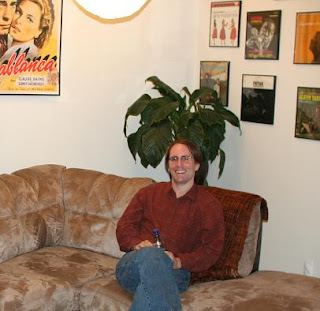
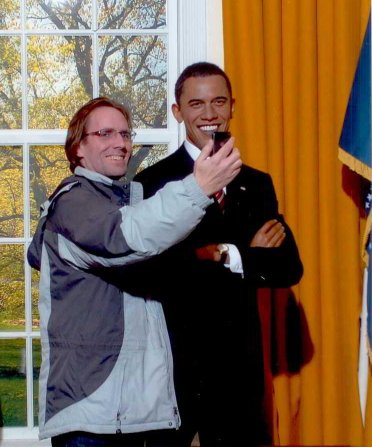
Some photos of me
How narcissistic is this? I was playing around with Picassa's face recognition, and it automatically pulled up a bunch of photos of me, which was a bit freaky but kind of cool.



Subscribe to:
Posts (Atom)